
Meal Planning Around the Week You Actually Have
Meal planning starts with the week and food you already have. Use a small set of accepted meal types, name the second use for leftovers, and keep one complete backup meal available.
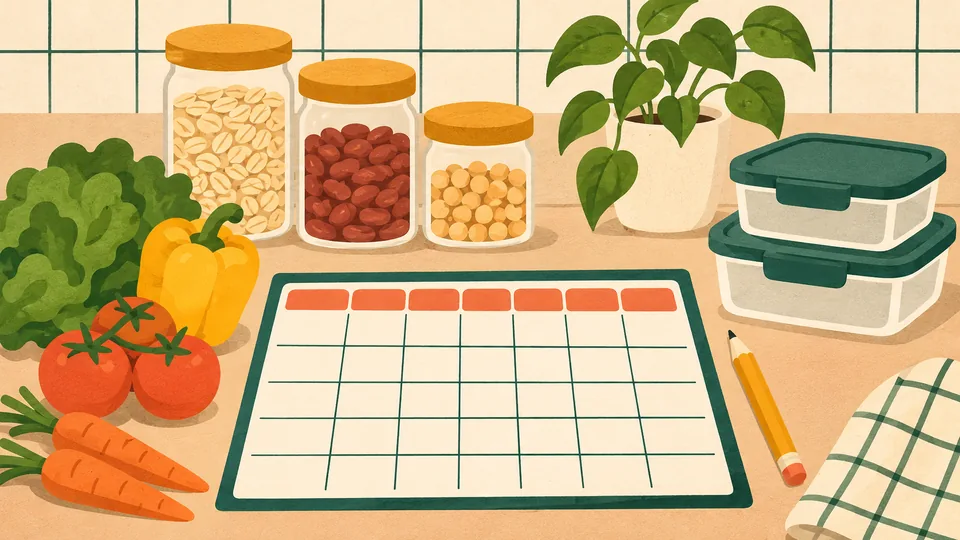
Map meals to the capacity of your week
Count low-, medium-, and higher-capacity nights to turn the calendar into a realistic meal pattern.
Private by design: this tool runs in your browser. Nothing you enter is saved or submitted.
Choose the right starting point
Start with the problem creating the most friction now. Each route leads to a different method rather than another version of the same checklist.
You are starting meal planning from scratch
Check the calendar and food on hand before choosing meals, then place the easiest option on the hardest day.
Start a weekly meal plan from the calendarThe same meals feel repetitive
Create variety by combining familiar formats, components, and flavor profiles instead of collecting more unused recipes.
Build a reusable family meal matrixThe plan collapses on busy nights
Keep a small, defined backup inventory made from meals the household will actually eat.
Build a limited backup meal shelfMeal Planning guides
9 focused resources, each built around a distinct household need.
How to Start Meal Planning for a Real Family Week
A flexible meal planning method that starts with your calendar, food on hand, household preferences, and realistic backup meals.
Read how to start meal planning for a real family weekFamily Meal Planner: Build a Flexible Weekly Meal Matrix
Build a flexible 3-to-7-night family meal plan from your schedule, familiar meal formats, available ingredients, effort limits, and backup options.
Read family meal planner: build a flexible weekly meal matrixHow to Make a Grocery List That Matches the Meal Plan
Turn a weekly menu into an accurate store list with quantity checks, pantry verification, and a plan for flexible substitutions.
Read how to make a grocery list that matches the meal planBuild a Pantry Backup Meal Shelf
Create a small, defined set of shelf-stable or freezer-supported meals for nights when the plan changes, without building an unused stockpile.
Read build a pantry backup meal shelfPlan Leftovers Before They Become Waste
Give cooked food a named second use, safe cooling and storage plan, and decision deadline before it disappears into the refrigerator.
Read plan leftovers before they become wasteMeal Prep by Bottleneck Instead of Batch Cooking Everything
Identify the step that makes weekday meals fail and prepare only that constraint, whether it is washing, chopping, cooking time, decisions, or cleanup.
Read meal prep by bottleneck instead of batch cooking everythingPlan Family Meals With Different Preferences
Use a shared base, optional components, predictable alternatives, and respectful boundaries when family members prefer different foods.
Read plan family meals with different preferencesCompare Family Meals by Cost per Serving and Effort
Compare meals using actual ingredient cost, portions produced, active time, cleanup, and likely reuse instead of price alone.
Read compare family meals by cost per serving and effortPack School Lunch the Night Before With a Safe Handoff
Turn school rules, accepted foods, cold storage, containers, and the morning handoff into a repeatable night-before lunch-packing system.
Read pack school lunch the night before with a safe handoffCommon questions about meal planning
Short answers for choosing a method before opening a full guide.
How many days should a family meal plan cover?
Plan only as far as the household calendar and food supply are reasonably predictable. For many homes that is one week, but a shorter plan is better when work, care, or travel changes frequently.
Does meal planning always save money?
It can reduce duplicate purchases and waste, but savings depend on actual prices, portions, leftovers, and whether planned food is eaten. Compare complete meals by real servings rather than basket price alone.
What if family members want different meals?
Use one adaptable base, serve selected components separately, include a familiar option, and define one simple alternative. Medical, allergy, sensory, and feeding needs require individual consideration.
New meal planning articles
Recently published additions that passed the same editorial and quality checks.
Five Meal-Planning Methods Compared for Real Family Weeks
Compare theme nights, fixed rotations, meal matrices, component prep, and calendar-first planning by variety, effort, flexibility, and food-waste risk.
Read five meal-planning methods compared for real family weeksThe Real Cost per Serving: Waste, Leftovers, and Effort
Compare family meals using servings actually eaten, ingredients reused elsewhere, discarded food, active time, and backup value - Not receipt totals alone.
Read the real cost per serving: waste, leftovers, and effort