
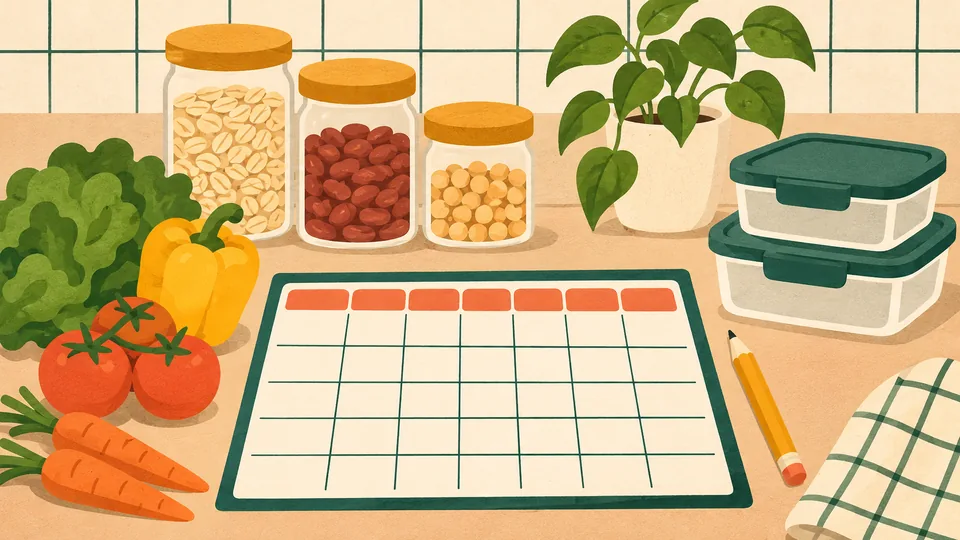
Expand every planned meal
Read the ingredient list for each recipe or write the components for familiar meals. Include sides, packed lunches, breakfasts, and snacks if they are part of the shopping trip. Vague entries such as taco night often hide several missing items.
Translate each meal into ingredients before combining the list. Include small items that often disappear from memory: cooking oil, toppings, lunch sides, breakfast staples, and the ingredient needed for a planned second use. If Tuesday's chicken becomes Wednesday's wraps, list enough chicken for both meals and the tortillas and fillings that make the second meal possible.
Combine before you subtract
Add the total amount needed across the week before checking the pantry. Two meals may each need half an onion, or several breakfasts may share milk. Combining first prevents a partial package from being counted twice.
Combine repeated ingredients in one place and convert them to the unit you actually buy. Two meals needing half an onion each become one onion, while three recipes calling for different amounts of broth need a total compared with package size. This step prevents both duplicate entries and the false confidence of seeing an ingredient listed without enough quantity.
Verify what you own
Physically check the quantity and condition of key items. Do not rely on memory for ingredients that are easy to run out of. Mark food that needs to be used first so it is not hidden behind the new purchase.
Build the list from the calendar-first meal plan, then move frequently depleted staples onto measured household restock points. When the list must support several eaters, start with a shared-base meal plan for different preferences. Add this task to the free home management planner.
Separate required and flexible items
Required items make the plan function. Flexible items can be swapped based on price or quality. For example, a stir-fry may require a main component and rice, while the exact vegetables can change. This makes the list useful when the store is out of stock.
Compare this choice through the real family-meal cost method including leftovers actually eaten and active effort.
Group by your route
Arrange the list by store section or by the route you normally walk. Keep cold items together, and plan to refrigerate perishables promptly. A well-ordered list reduces backtracking and helps another person shop from the same plan.
Quantity check example
If two meals need onions, one needs half and the other needs two, the list needs three onions unless a verified usable half already exists. If a recipe calls for a small amount of herbs sold in a large bunch, give the remainder a second destination before buying it. The same check applies to bread, yoghurt, stock, and produce sold by the bag.
When another person shops, add the acceptable substitution beside the item, such as any firm leafy green or an unsalted canned bean. Do not rely on a text exchange from the store for every flexible ingredient.
Put the method into practice
Turn meals into one accurate list
- Expand every meal
- Combine quantities
- Verify the pantry
- Mark flexible substitutions
- Group by shopping route
Practical tip: Combine quantities and check the kitchen before adding an item to the list.