
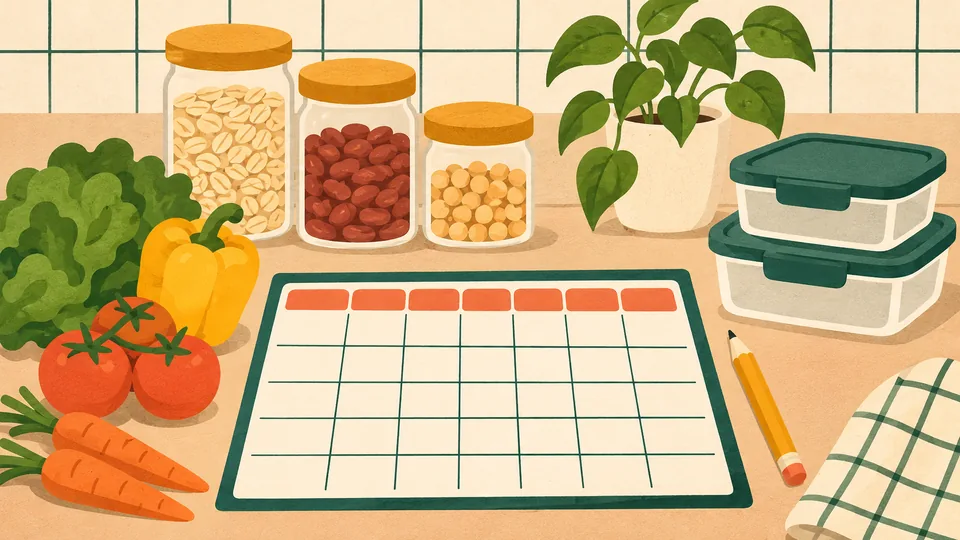
Plan the calendar before the menu
Mark late workdays, practices, appointments, and evenings when another person cooks. Match effort to the day. A meal that is easy on Saturday may be unrealistic on a Wednesday with only twenty minutes at home.
Mark the nights with the least cooking capacity before choosing any meals. Late appointments, commuting, sports, or a caregiver working through dinner need food that is already prepared, assembled quickly, or intentionally purchased. Put higher-effort meals on nights with both time and cleanup capacity. This reverses the common mistake of choosing appealing recipes first and forcing them into an unsuitable week.
- High-capacity night: a new recipe or batch cook
- Medium-capacity night: familiar meal with one side
- Low-capacity night: leftovers, assembled meal, freezer meal, or pantry backup
Shop the kitchen
List food that should be used soon, especially produce, opened dairy, thawed ingredients, and leftovers. Then check the freezer and pantry. Build the first meals around those items before choosing more groceries.
Use a quick inventory with three columns: food that must be used soon, reliable staples, and frozen or shelf-stable backups. Build the first meals around the must-use items only when they can form a complete meal. An isolated vegetable or half jar of sauce is not a dinner plan. Pair it with a protein, starch, or accepted base before counting it as used.
Use meal types to reduce decisions
A meal type is a flexible slot, not a rigid theme. Try soup and sandwich, grain bowl, pasta, tacos or wraps, tray bake, breakfast for dinner, and leftovers. Choose types first, then plug in ingredients your household will eat.
Convert the chosen meals into quantities with the meal-plan grocery list method, then reduce future decisions with a reusable family meal matrix. Once the meals are chosen, prep only the step that creates the real bottleneck. Continue planning with More Than a Mom of Three and its free household tools.
Create a reliable meal bank
Keep a list of meals that meet three tests: the household usually eats them, the cook understands the process, and the ingredients are reasonably available. Add notes about total time, active time, and easy substitutions. Twenty reliable meals can support months of varied weekly plans.
- Five meals under twenty minutes
- Five low-cost pantry meals
- Five meals that create useful leftovers
- Five meals another household member can prepare
Plan leftovers deliberately
Write leftovers into the plan rather than treating them as a failure to cook. Cool and refrigerate food promptly, label it, and use safe storage guidance. If a meal will not be eaten in time, freeze a portion while it is still appealing.
For the next planning cycle, use the family meal-planning methods guide to choose between themes, rotation, matrix, prep, and calendar-first planning.
Keep one backup meal
A backup meal protects the plan when the day changes. Choose something shelf-stable or frozen that your household will reliably eat. Replacing an unrealistic plan is successful planning, not a broken plan.
A sample week built from constraints
Imagine Tuesday has an evening activity and Thursday is the grocery day. Monday can be a batch meal that creates Tuesday leftovers. Wednesday uses a familiar quick meal. Thursday uses the most perishable new ingredients. Friday is flexible: a freezer portion, pantry backup, or planned meal depending on energy. The weekend holds the new or longer recipe.
This structure is more durable than assigning a fixed cuisine to every weekday. It responds to time, food condition, and capacity while still answering the question of what is for dinner.
Put the method into practice
Plan the week before choosing meals
- Start with the calendar
- Use food on hand first
- Plan by meal type
- Schedule leftovers
- Keep a backup meal
Practical tip: Put the easiest meal on the hardest day and keep one backup available.