
Choose a safe complete task
A complete task has a visible result, such as putting dirty clothes in a hamper, clearing a place setting, matching socks, refilling a safe supply, or returning toys to labelled spaces. Avoid tasks involving hazardous products, sharp tools, heat, heavy lifting, or unsafe climbing.
Select a task the child can complete safely with the tools, reach, attention, and instruction currently available. Clearing one place setting, matching socks, feeding a pet with supervision, or returning toys to marked spaces has a visible result. Avoid handing over a vague category such as clean your room before the child can identify the separate actions and stopping point.
Teach before expecting independence
Show the task slowly, explain why it matters, complete it together, then watch the child try. A reminder is not a substitute for instruction. If the task keeps failing at the same step, change the environment or teach that step again.
Teach by doing the complete task together, narrating the decisions that are easy for an experienced adult to miss. Show where supplies live, what should never be mixed or touched, what finished looks like, and who to ask when something is different. Then reduce support gradually: model, work together, observe, and only then expect independent ownership.
Make the finish line visible
Words such as clean or tidy can mean different things. Use a short checklist or a photo of the completed space if helpful. Keep the standard functional and age appropriate.
Use shared decisions sparingly through a short family logistics meeting, and apply the teaching cycle to a bounded task such as the shared-bathroom cleaning rhythm. Continue planning with More Than a Mom of Three and its free household tools.
Connect ownership to routines
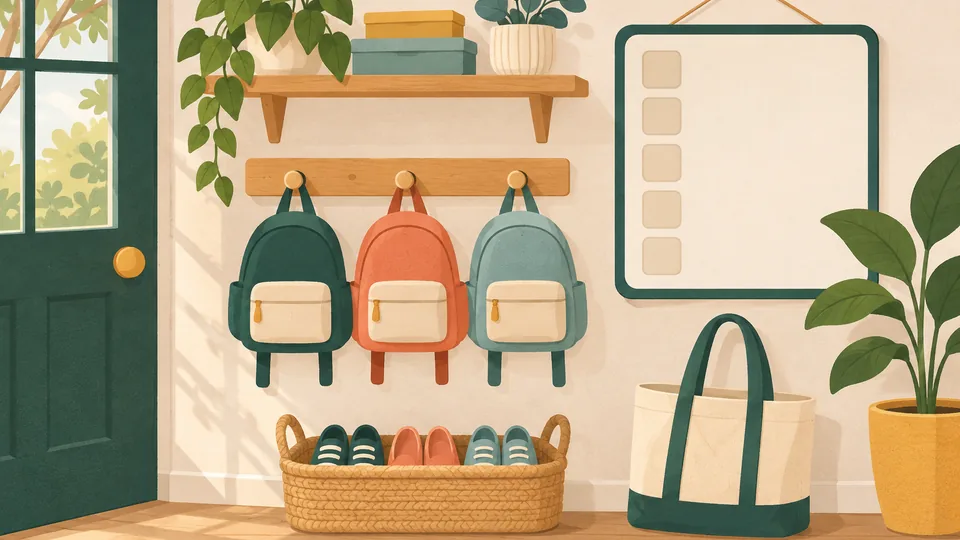
Attach the responsibility to an existing anchor: lunchbox to the kitchen after school, clothes in the hamper before bath, or shoes in the basket after entering. Consistent cues reduce repeated negotiation.
Use the four layers of household ownership to separate genuine transfer from one-step help.
Review workload fairly
Children are learning, but adults remain responsible for a safe and functioning home. Check whether responsibilities are distributed fairly among household members and whether school, disability, sleep, and other demands require changes. The goal is participation and skill, not replacing adult care.
Troubleshoot the task before blaming motivation
Check whether the child can physically reach the storage, identify the correct supplies, remember the sequence, and recognize the completed result. A toy bin that is too full, a hamper behind a heavy door, or several similar cleaning products can make a simple instruction difficult to follow.
Use specific feedback about the action: the books are back on the shelf and the walking path is clear. This teaches the standard more clearly than a broad label about being good, lazy, tidy, or messy.
Put the method into practice
Teach the task before handing it over
- Select safe tasks
- Teach step by step
- Show the finish line
- Attach tasks to anchors
- Review fairness and capacity
Practical tip: Show the finished result and reduce help only after the child can see each step.