
Start with the real arrival
Observe the first twenty minutes for several days. Note hunger, bathroom needs, sensory load, sibling conflict, device requests, papers, wet clothing, and the next departure. Design around those facts rather than an ideal homework-first routine.
Observe what enters the home with each person: bags, shoes, devices, lunch containers, sports equipment, papers, medication, and emotional load. The first steps should protect urgent needs and prevent items from disappearing. A younger child may need an adult alongside the route, while an older child may only need reachable storage and one visible prompt.
Build a three-stop landing path
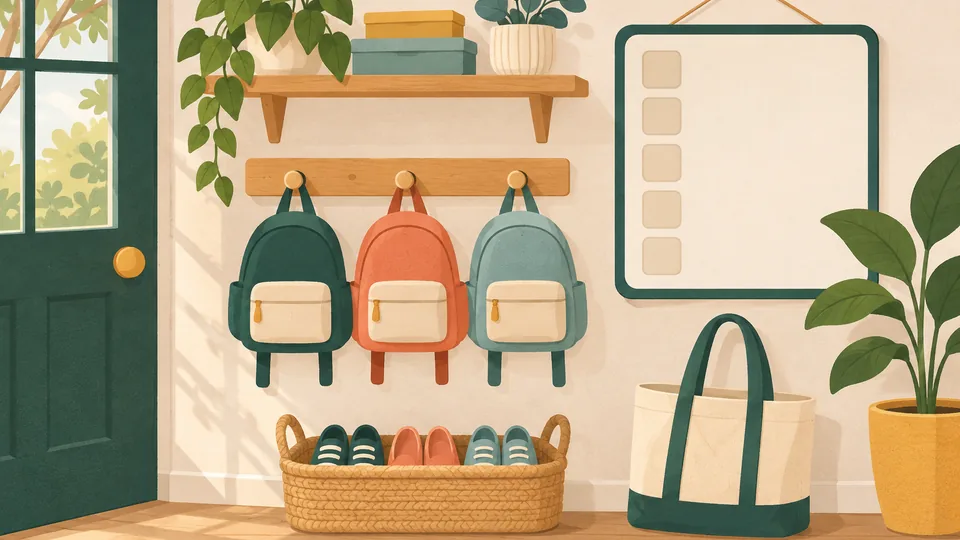
Create one place for belongings, one place for action papers, and one appropriate place for food or water. Fewer stops are easier to repeat. Put hooks, bins, and the paper inbox at reachable heights while keeping hazards and private information secure.
Use three physical stops at most: belongings, food or care, and the next transition. For example, bag and shoes go to the launch point, lunch items go to the kitchen, then the child chooses a defined decompression option. Extra instructions can wait until those stops are stable. A long arrival checklist competes with the need to shift out of the school day.
Define decompression
A decompression period can include quiet, movement, a snack, conversation, or another suitable activity. Give it a beginning and an end connected to the next anchor. Different children may need different environments and amounts of adult support.
- Arrive and secure the entry
- Bag and shoes to their places
- Papers to the action inbox
- Food, water, bathroom, or care need
- Defined decompression
- Check the next anchor
Give bags and papers a physical destination through the family entryway system, then route deadlines with the school-form intake and return path. Add this task to the free home management planner.
Ask fewer, better questions
Immediate broad questions can feel demanding after a full day. Begin with practical needs and leave room for the child to talk later. Use school communication channels and papers for facts rather than expecting a tired child to remember every deadline.
If the usual coordinator is unavailable, the household handoff manual should show the trigger, owner, source, and fallback.
Prepare the next transition
If the family leaves again, prepare equipment, clothing, transport, and food before decompression fully ends. If homework or another responsibility follows, make its start cue and available help clear without turning the entire evening into reminders.
Adapt support to the child
Age, disability, sensory needs, transport, care arrangements, and school demands all change the routine. A visual sequence may help one child while another needs privacy and a calendar alert. Seek qualified support when school avoidance, distress, eating, health, or safety concerns persist.
Review only the repeated friction. If papers vanish, move the inbox. If every arrival begins with conflict over food, agree on suitable snack choices earlier.
Put the method into practice
Give the school day a calm landing
- Observe the first minutes
- Use three landing stops
- Define decompression
- Prepare the next anchor
- Adapt support
Practical tip: Handle belongings, food, and care before asking for a full report about the day.