
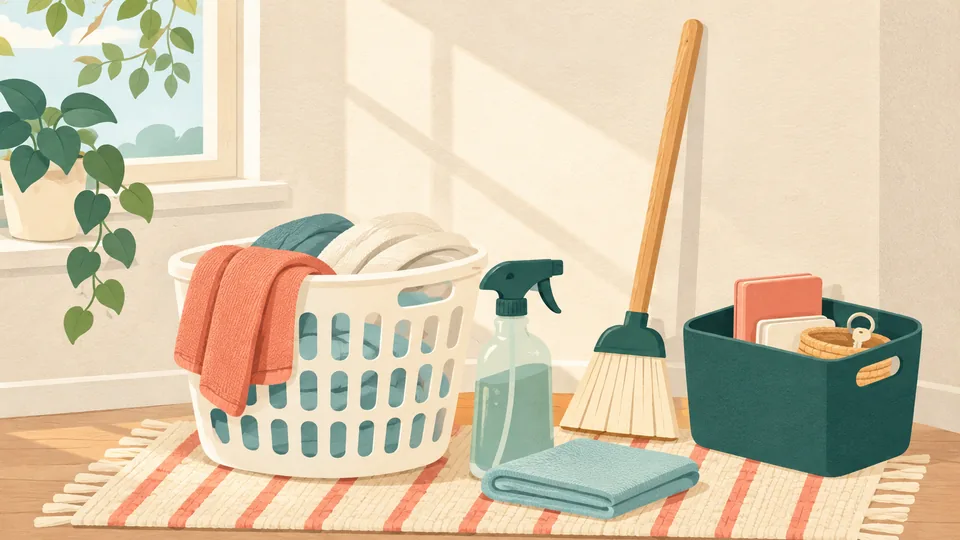
Start with a visible definition of done
A messy home contains several different jobs at once. Treating all of them as one large task is what makes the work feel endless. For the first reset, done means the home is safe to walk through, food mess is handled, necessary clothes and dishes can be used, and the main rooms feel functional.
This is a recovery pass, not a deep clean. Skip drawers, baseboards, decorative arranging, and donation decisions unless an item is obviously rubbish. Those jobs require a different kind of attention.
Walk through the home once before touching anything and name the few conditions that would make it usable tonight. In one home that may mean a clear route from the door to the bedrooms, a sink that can hold the next meal's dishes, one working bathroom, and clean clothes for tomorrow. Writing those outcomes down prevents a visible but low-priority pile from taking over the reset.
- Open curtains and turn on lights
- Set a timer for one focused block
- Put shoes on and bring water
- Choose one basket for items that need another room
Use the six-pass reset
Move through every active room once for each category. A pass keeps your brain on one decision and reduces the temptation to stop and reorganize a drawer.
Keep a container or bag for each pass and empty it before starting the next one. Trash must leave the room, dishes must reach the sink or dishwasher, and laundry must reach the hamper or machine. Moving a pile from the floor to a chair does not complete a pass. This simple test distinguishes real progress from rearranging the same work.
- Trash: collect rubbish and empty small bins
- Dishes: bring cups and plates to the kitchen, then start the dishwasher or wash one sink load
- Laundry: gather dirty clothes and begin the load your household needs next
- Belongings: return obvious items and place uncertain items in the catch-all basket
- Surfaces: clean kitchen food-contact areas, bathroom sinks, toilets, and frequently touched handles
- Floors: sweep or vacuum walking paths first, then mop only where needed
Once the home is stable, protect the reset with an adjustable weekly cleaning schedule and move decision-heavy belongings through the low-pressure decluttering method instead of mixing those decisions into the recovery pass. For the next maintenance pass, use a safe speed-cleaning routine with a defined finish line. Add this task to the free home management planner.
Choose the right order for your home
The standard order works because machines run while you continue. If there is broken glass, spoiled food, pet waste, a blocked exit, or another safety issue, handle that first. If someone needs clean work or school clothes in the morning, move that laundry load to the front.
Keep cleaning products in their original containers and follow their labels. Never mix bleach with ammonia, vinegar, or other cleaners. Ventilate the room when the label calls for it, and keep products away from children and pets.
Choose the finish line first with four realistic levels of clean so detail work does not displace safety and function.
What to do with the catch-all basket
The basket is a temporary routing tool, not permanent storage. At the end of the reset, take it to one room at a time and put away only what already has a home. Place homeless items together and schedule a separate 20-minute decision session.
If the basket repeatedly fills with the same items, the issue is probably placement. Store those items closer to where they are dropped, or create a deliberately sized landing zone.
A realistic restart for tomorrow
Pick two small closing actions for the next seven days. A useful pair is clearing the kitchen sink and resetting the main living surface. When those actions become automatic, add one more. Maintenance succeeds when the routine is small enough to repeat on an ordinary tired day.
Put the method into practice
The reset order to remember
- Stabilize before deep cleaning
- Work by category, not by random room
- Handle safety and food mess first
- Finish with two repeatable closing actions
Practical tip: Finish one pass through the home before adding detail work.