
Inventory surfaces before products
Write down the active materials in the kitchen, bathroom, floors, furniture, and electronics. Note stone, sealed or unsealed wood, stainless steel, coated screens, and specialty finishes. Manufacturer care instructions take priority over a general cleaning tip.
List the actual materials in the rooms you clean: sealed stone, wood finishes, glass, stainless steel, tile, grout, laminate, painted surfaces, and upholstery may have different care requirements. Check manufacturer guidance or product labels when uncertain. A product described as multipurpose is not automatically appropriate for every surface in the home.
Separate cleaning from disinfecting
Cleaning removes soil with water, soap, or detergent. Disinfecting uses a product intended for specific germs and surfaces and requires its label directions, including contact time. Routine household work often needs cleaning, while disinfecting may be appropriate in defined circumstances.
Separate ordinary soil removal from disinfection. Most routine cleaning begins with removing dirt using a suitable cleaner and method. Disinfection is a different process that depends on the product, surface, intended organism, contact time, and label directions. Buying stronger products does not remove the need to clean first or follow the stated use conditions.
Choose the smallest useful core
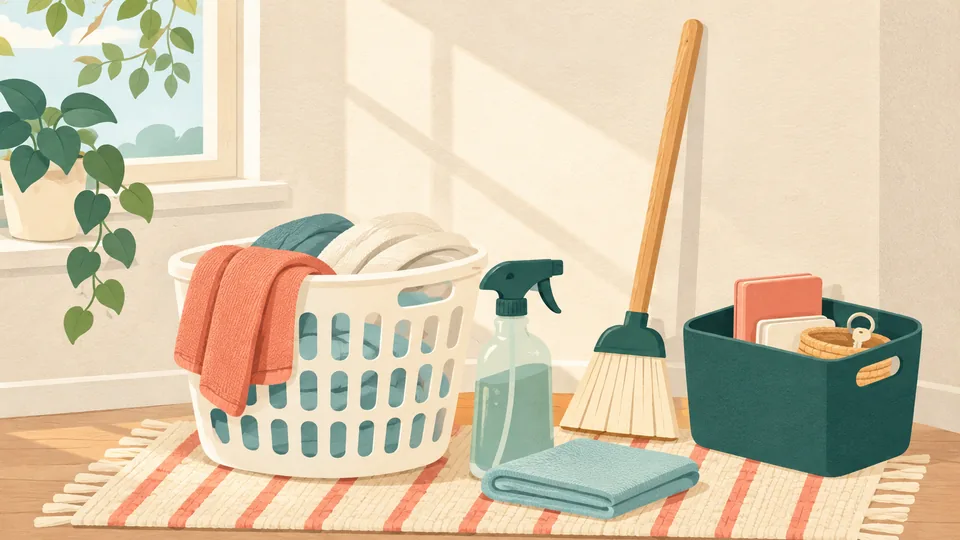
A core kit might include a general cleaner approved for common surfaces, dish detergent, the specific bathroom or toilet product the home needs, several washable cloths, a scrub tool, and gloves when labels call for them. Add a specialty product only for a real material or task.
- Label-approved cleaner
- Several clean cloths
- Dedicated toilet tool
- Small scrub brush
- Gloves when required
- Rubbish bags
Test the kit against a real recurring job such as the shared-bathroom cleaning rhythm, and replace supplies at a deliberate threshold using household restock points. Add this task to the free home management planner.
Prevent tool cross-contamination
Keep kitchen, general, and toilet tools identifiable. Change a cloth when visibly soiled and launder reusable tools appropriately. A portable caddy should not cause a toilet brush or leaking product to travel through food-preparation areas.
Choose the finish line first with four realistic levels of clean so detail work does not displace safety and function.
Store for safety and speed
Keep products in original labelled containers, upright, closed, and away from children and pets. Do not transfer products to drink bottles or combine leftovers. Store the core kit near the work only when that location is secure; otherwise keep one safe central location.
Audit every three months
Remove empty containers, damaged tools, and products that no longer match a surface. Follow the label and local rules for disposal. Record the few products that repeatedly run out so restocking is based on use rather than fear.
If a product caused damage or irritation, stop using it, follow label first-aid directions if relevant, and seek appropriate professional advice. Do not solve a surface problem by mixing products.
Put the method into practice
The safest small kit
- Start with materials
- Match product to purpose
- Keep the core small
- Separate tools
- Use original containers
Practical tip: Keep products in their original containers and match each one to a real surface.